
Deck Repair:
Finished Deck:
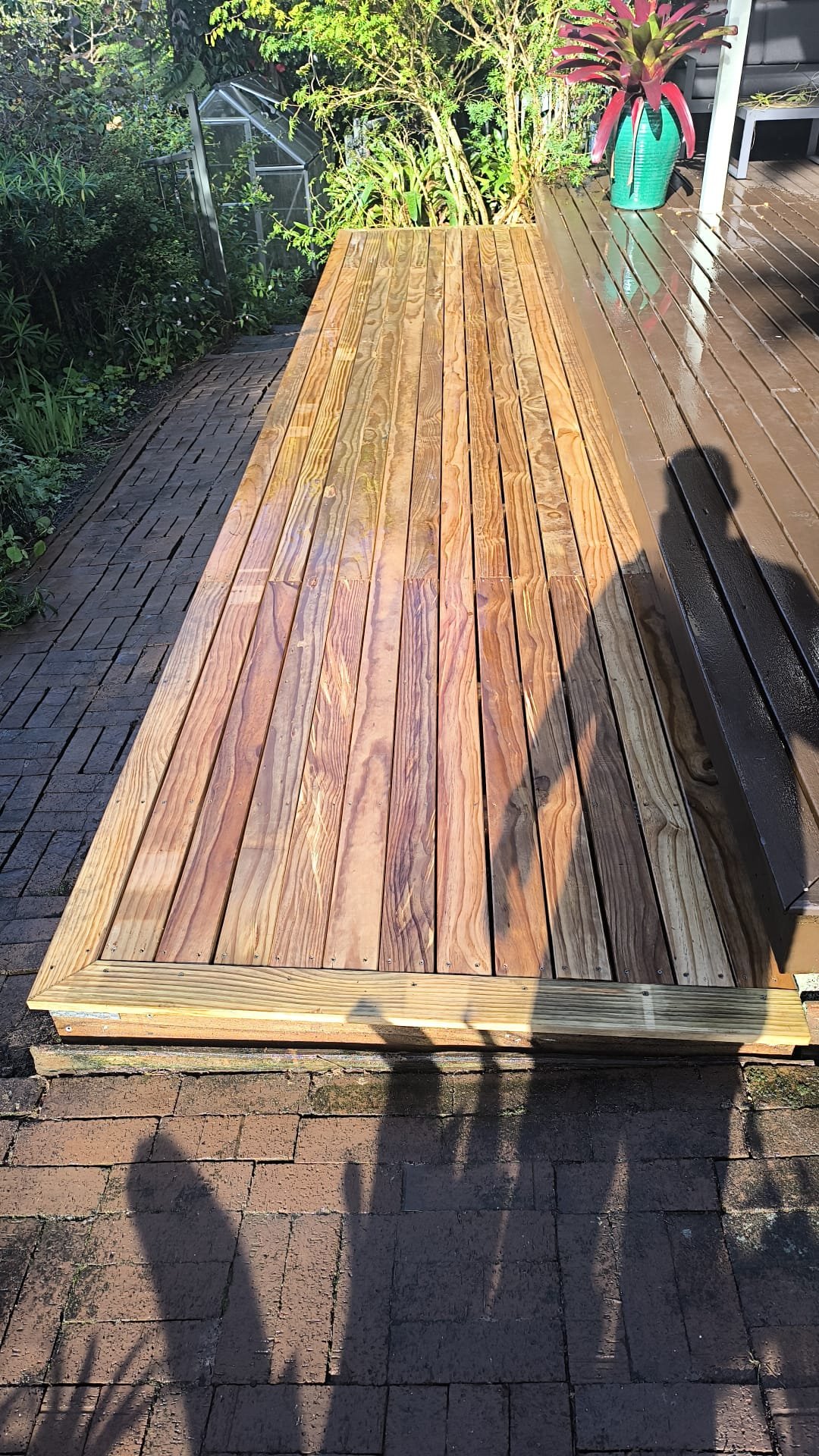
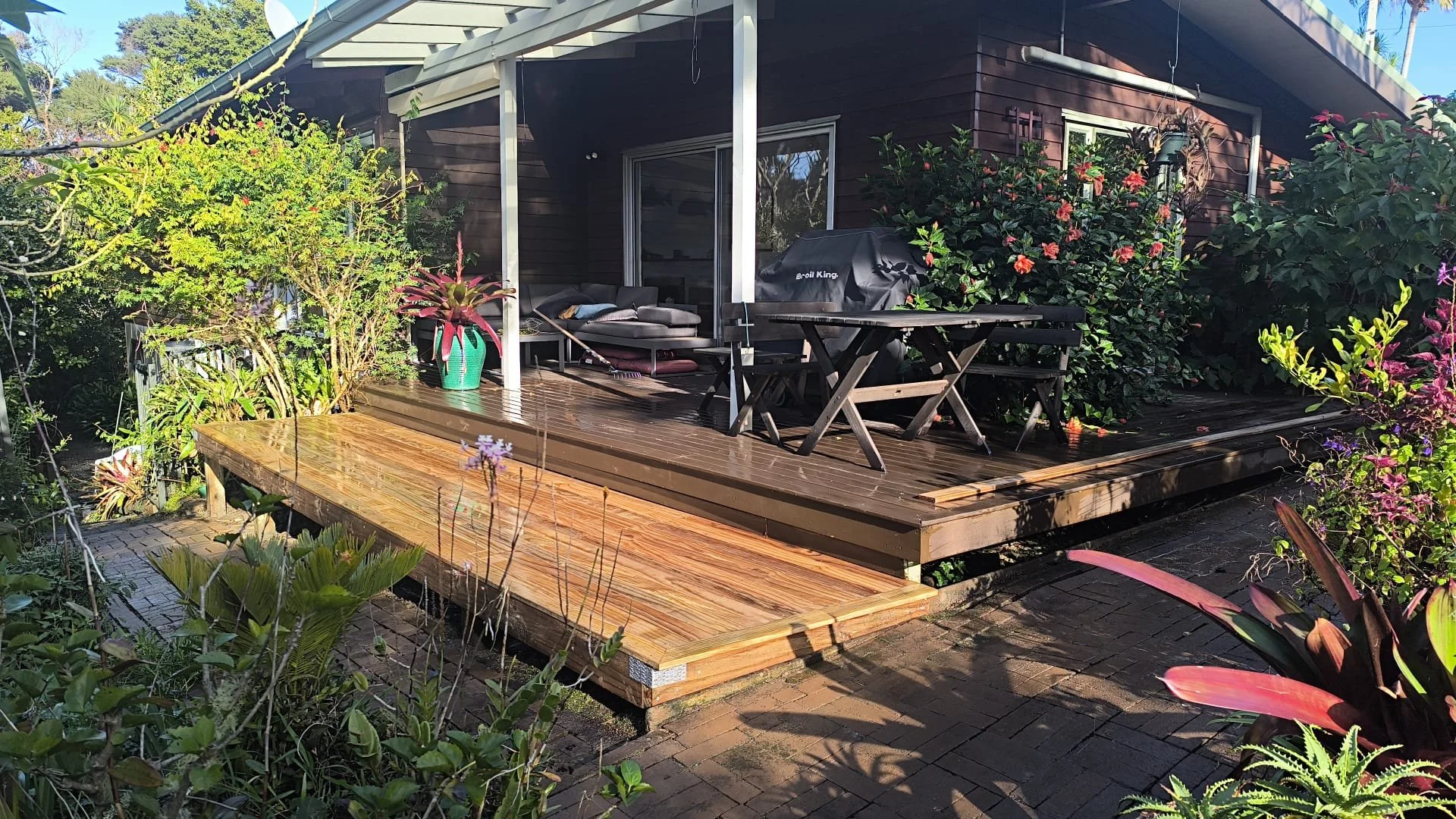
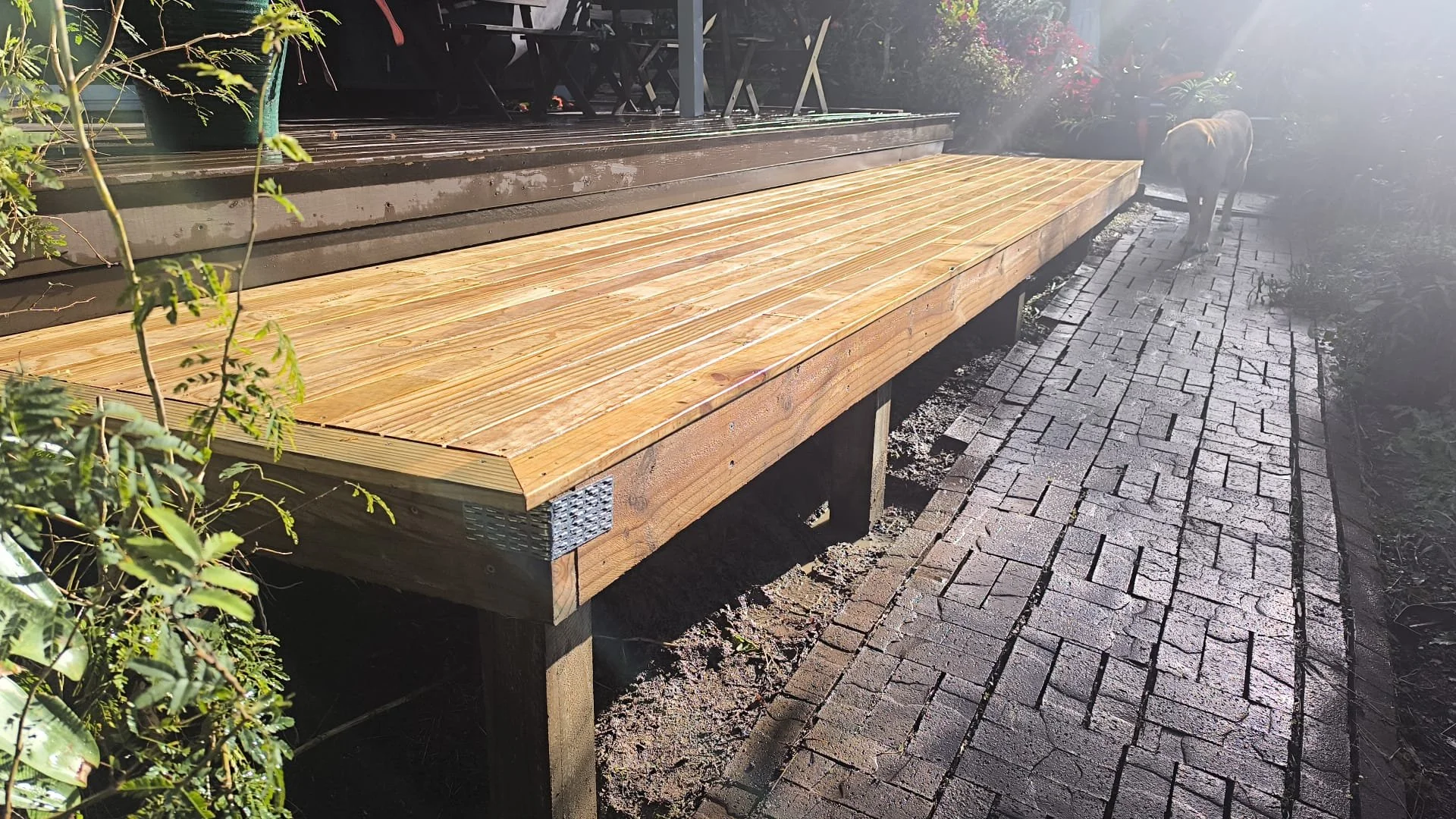
The repaired deck has been reconstructed using premium grade timber, more appropriately suited to the wet conditions that this part of their deck is exposed to. Along with the stronger footings we’ve installed (heaver posts in deeper post holes and concreted into position), their new deck is now set to last far longer than the old one.
During:
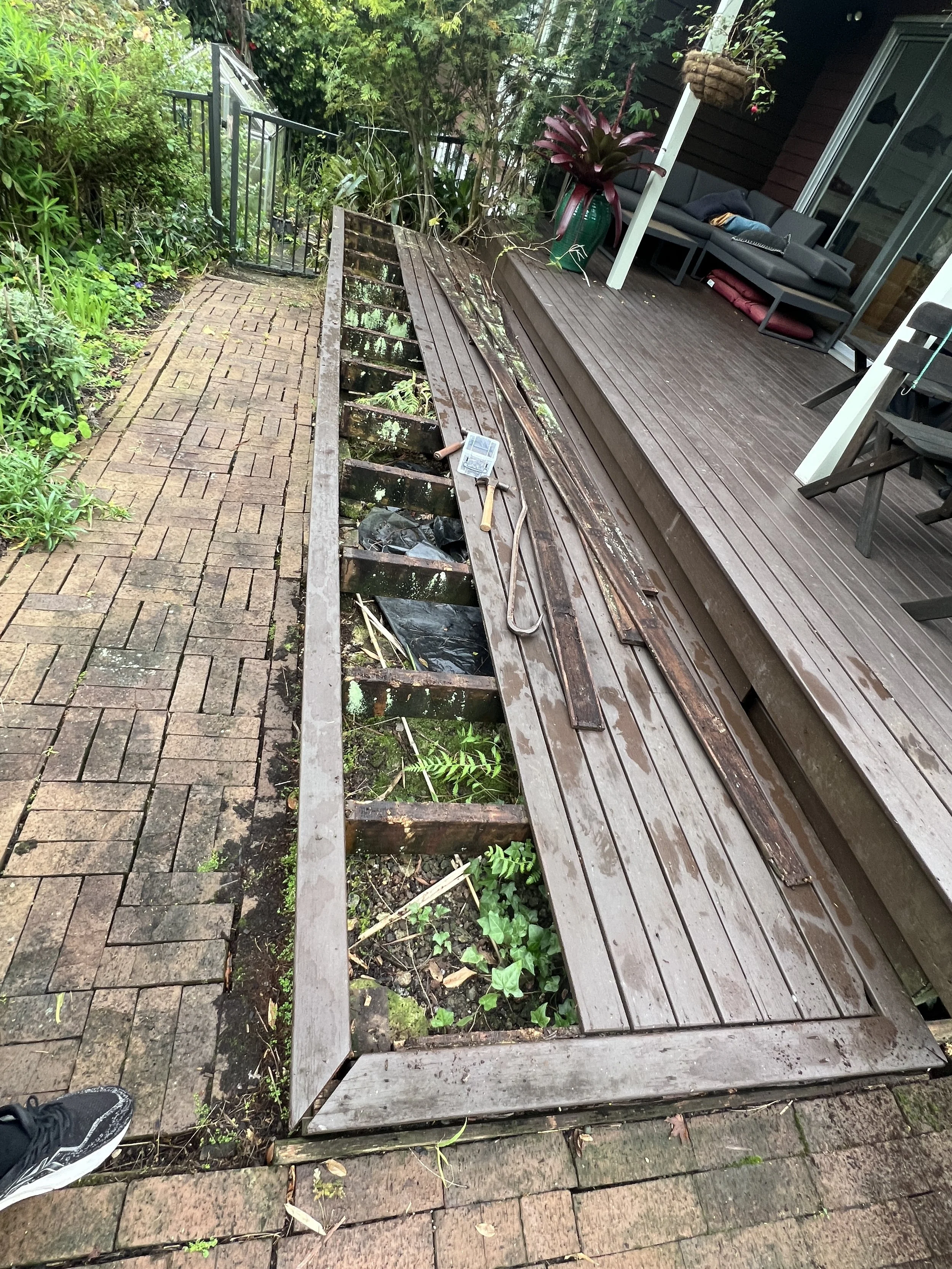
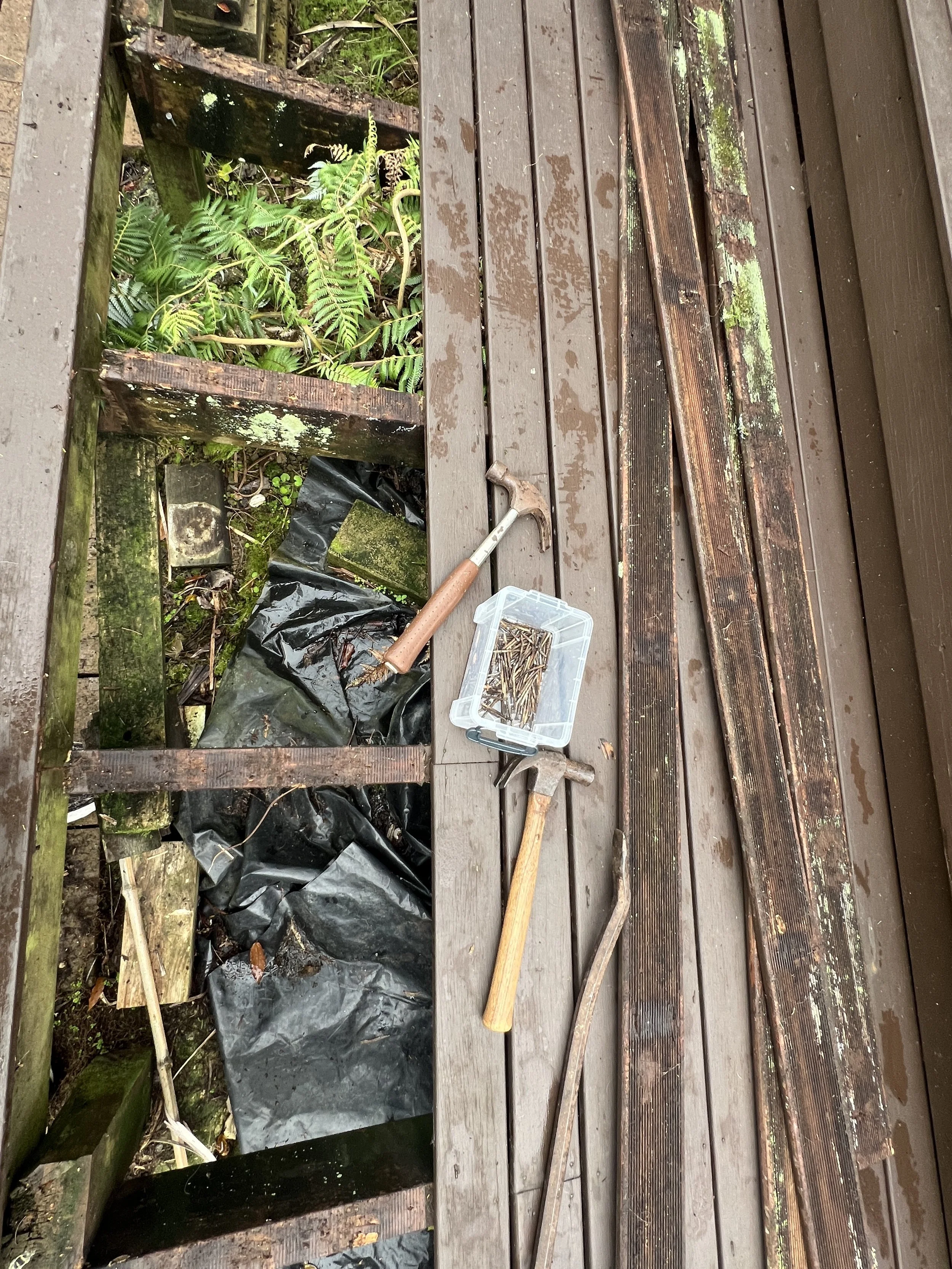
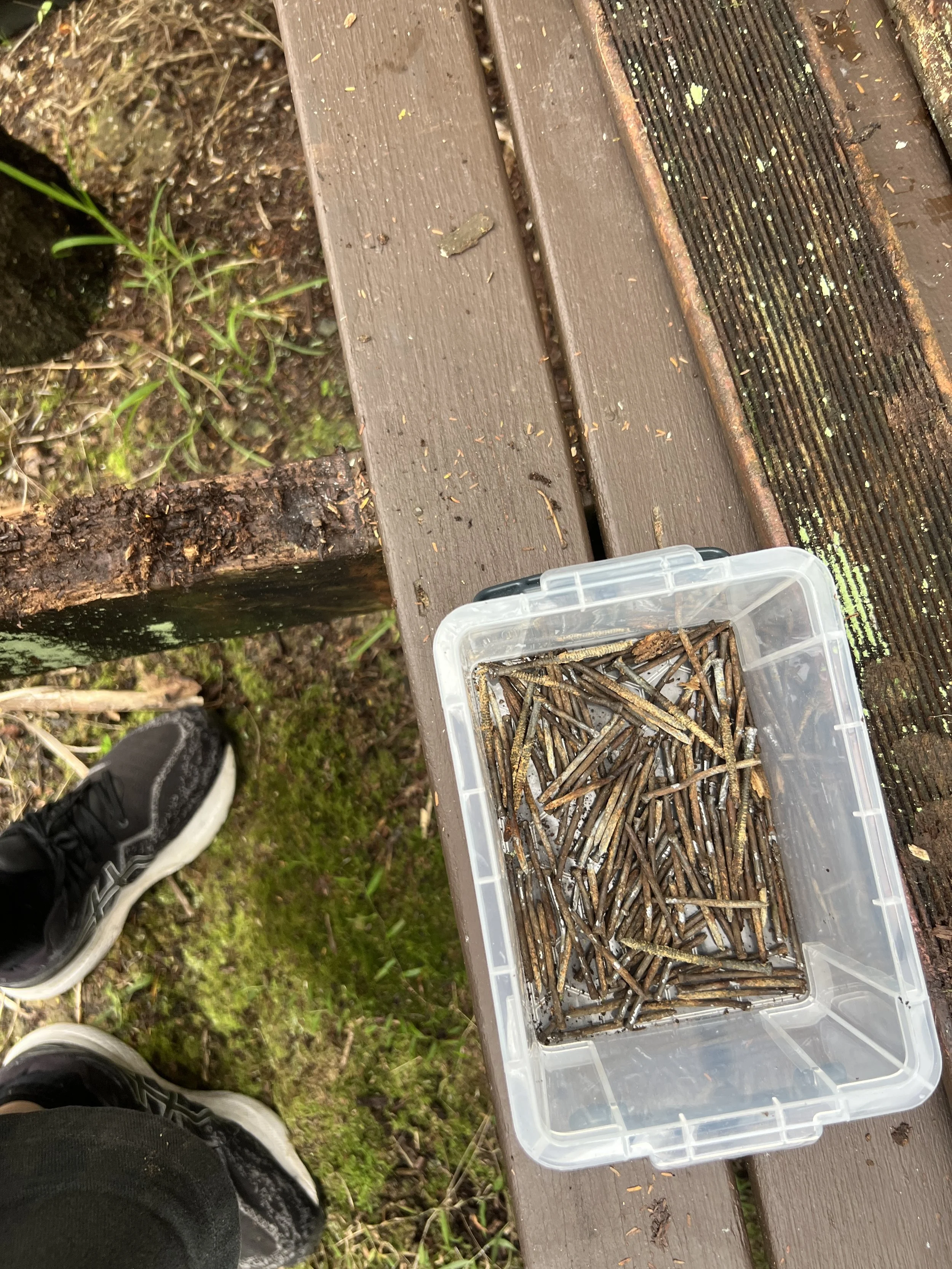
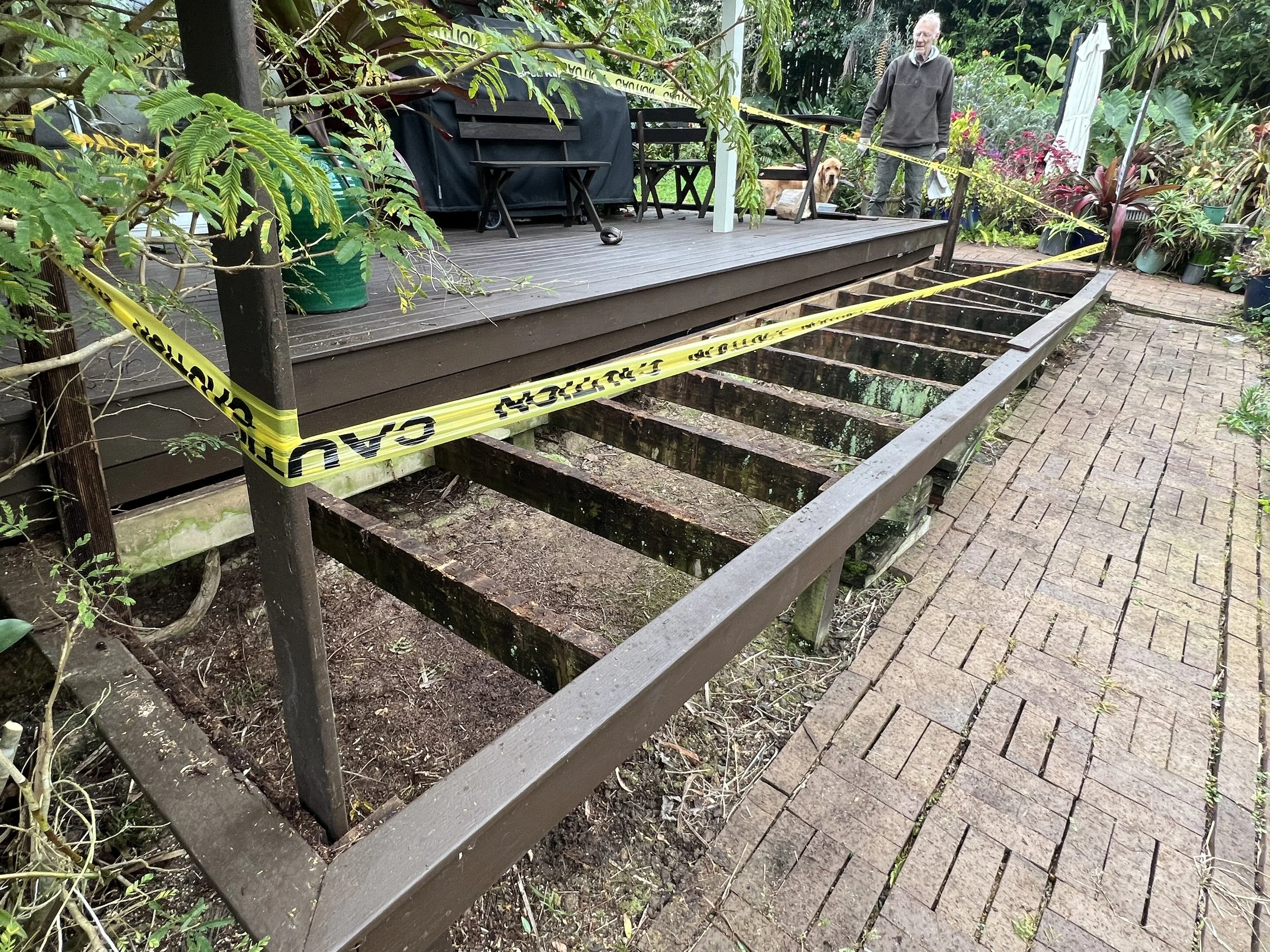
We meticulously lifted each length of the old decking timber, in the hope of being able to retain and reuse them, de-nailing the decking timber and joists as we went.
Rusty nails left in timber, or dropped on the ground, present a significant potential for injury, including the transmission of tetanus.
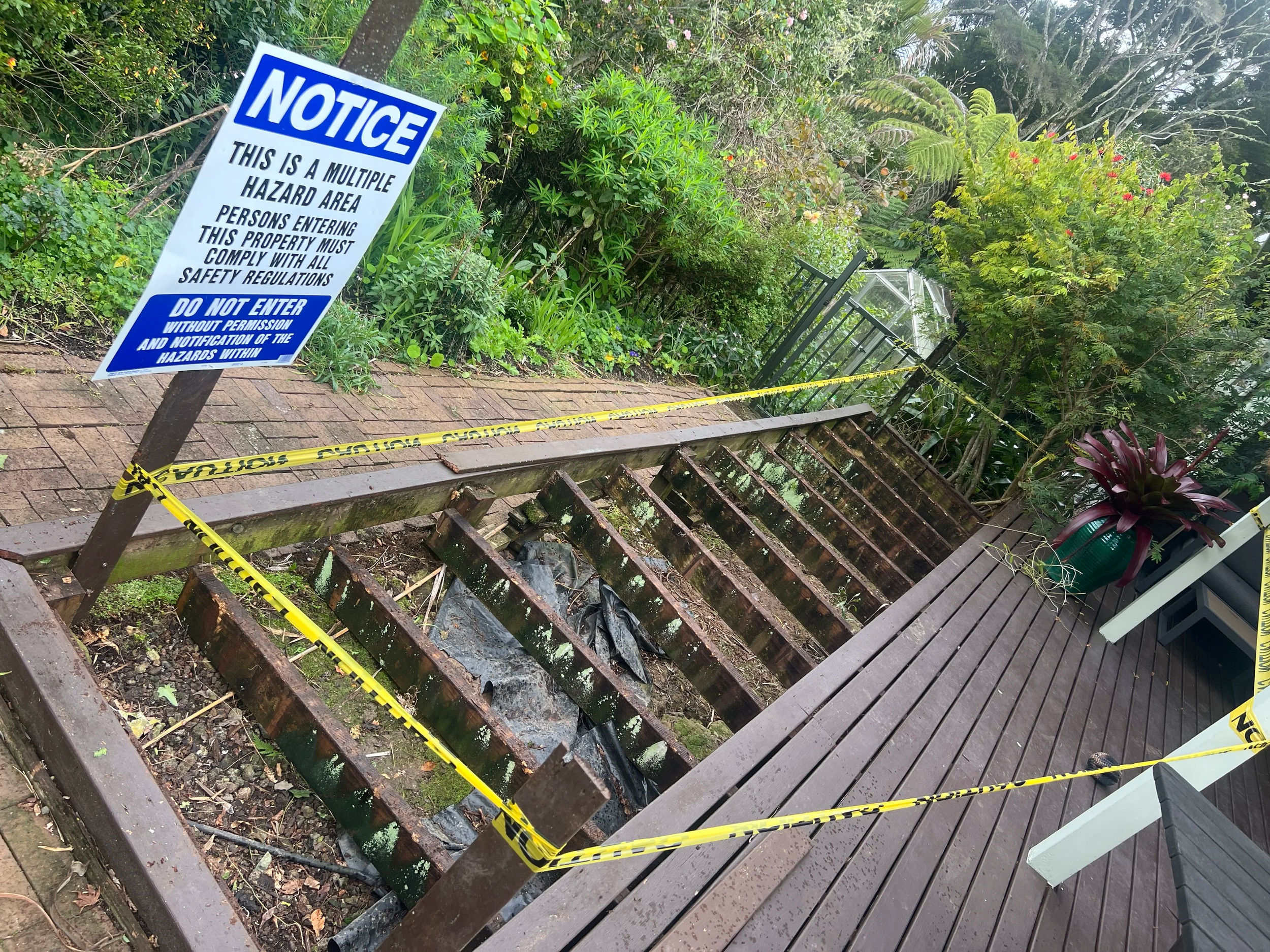
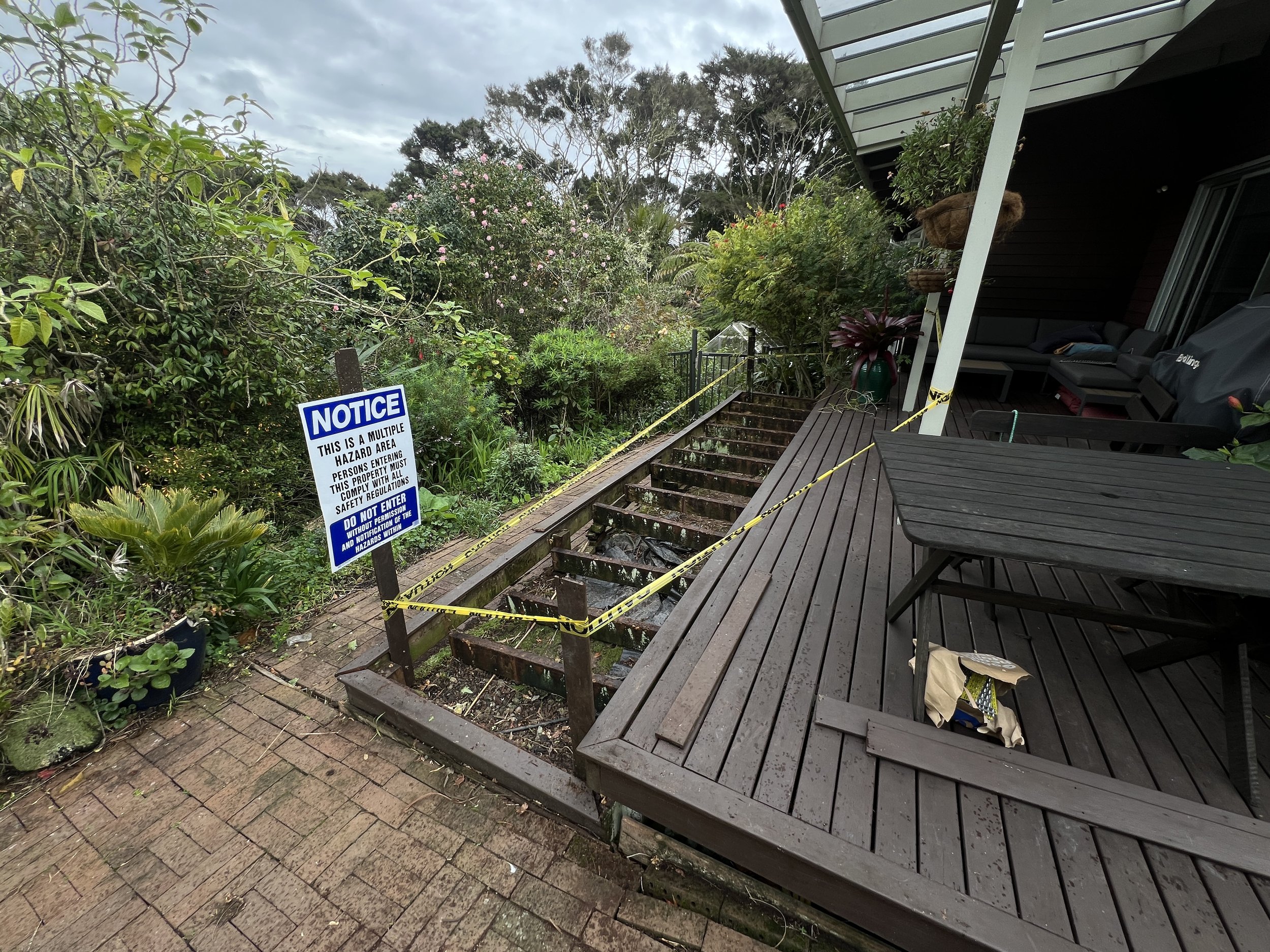
A thorougher H&S (health and safety) plan was prepared and put in place for the repair job.
At the end of the first day, the area was appropriately cordoned off, with risk notice boards having been erected - in line with our H&S plan.
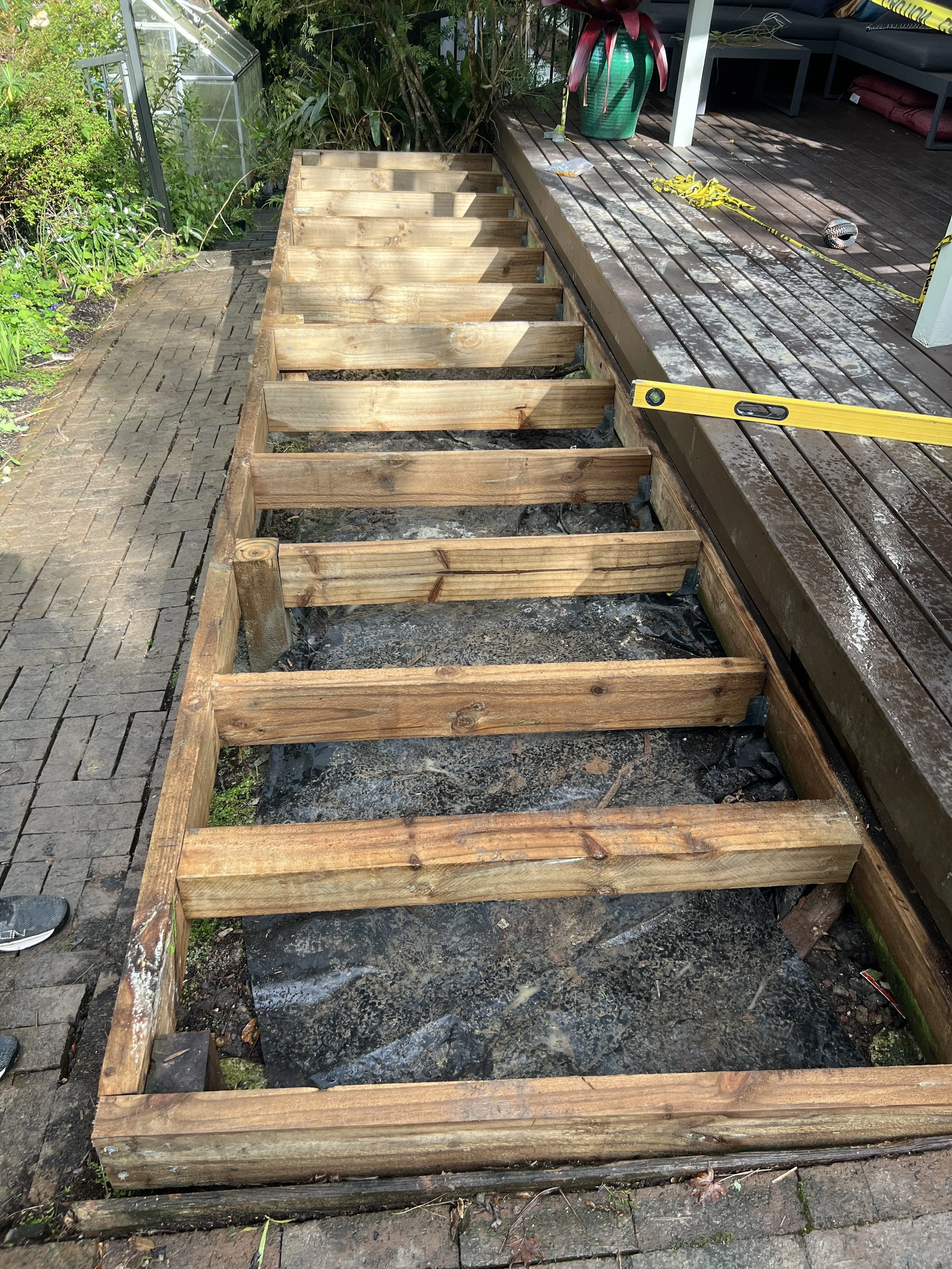
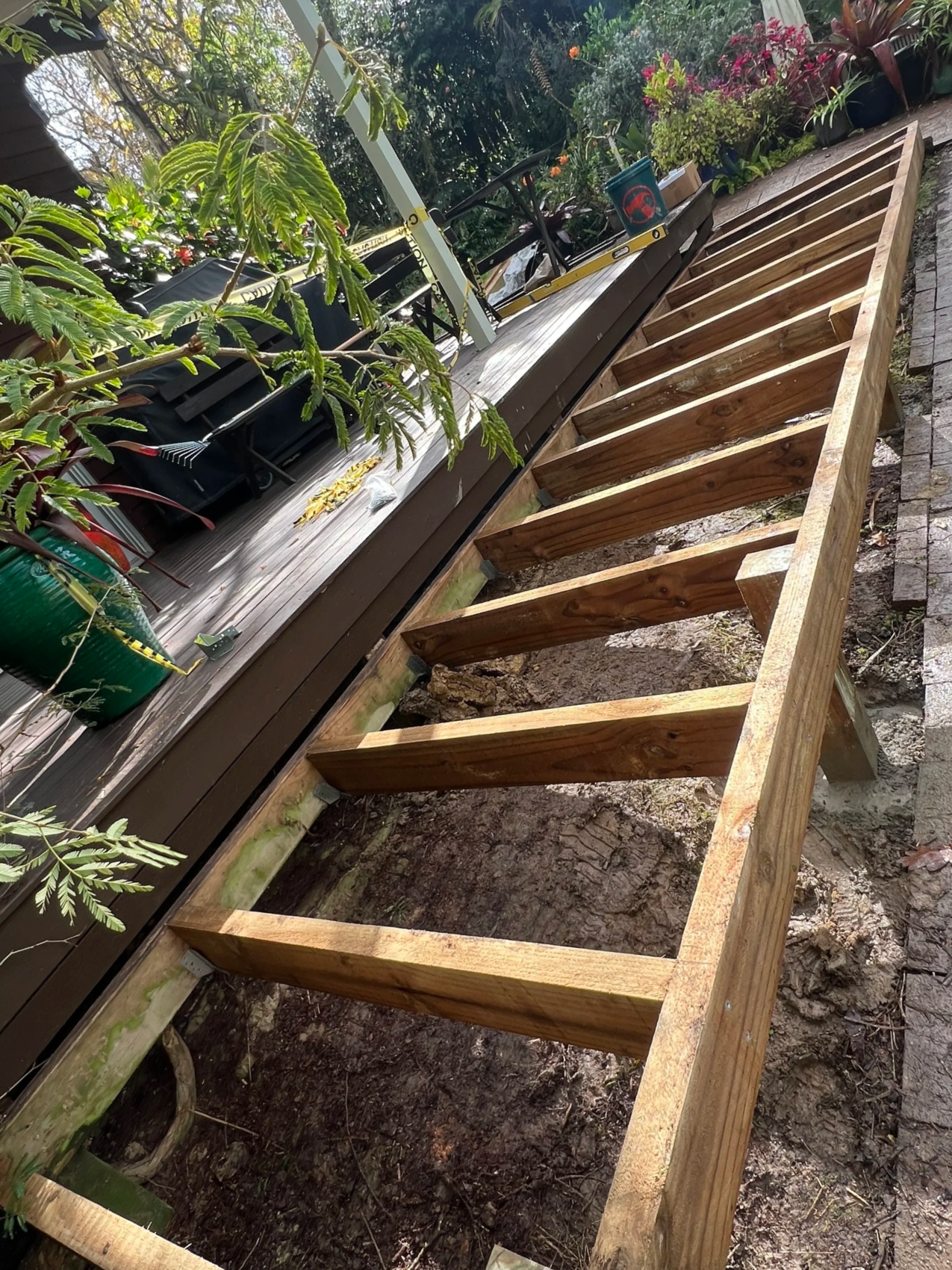
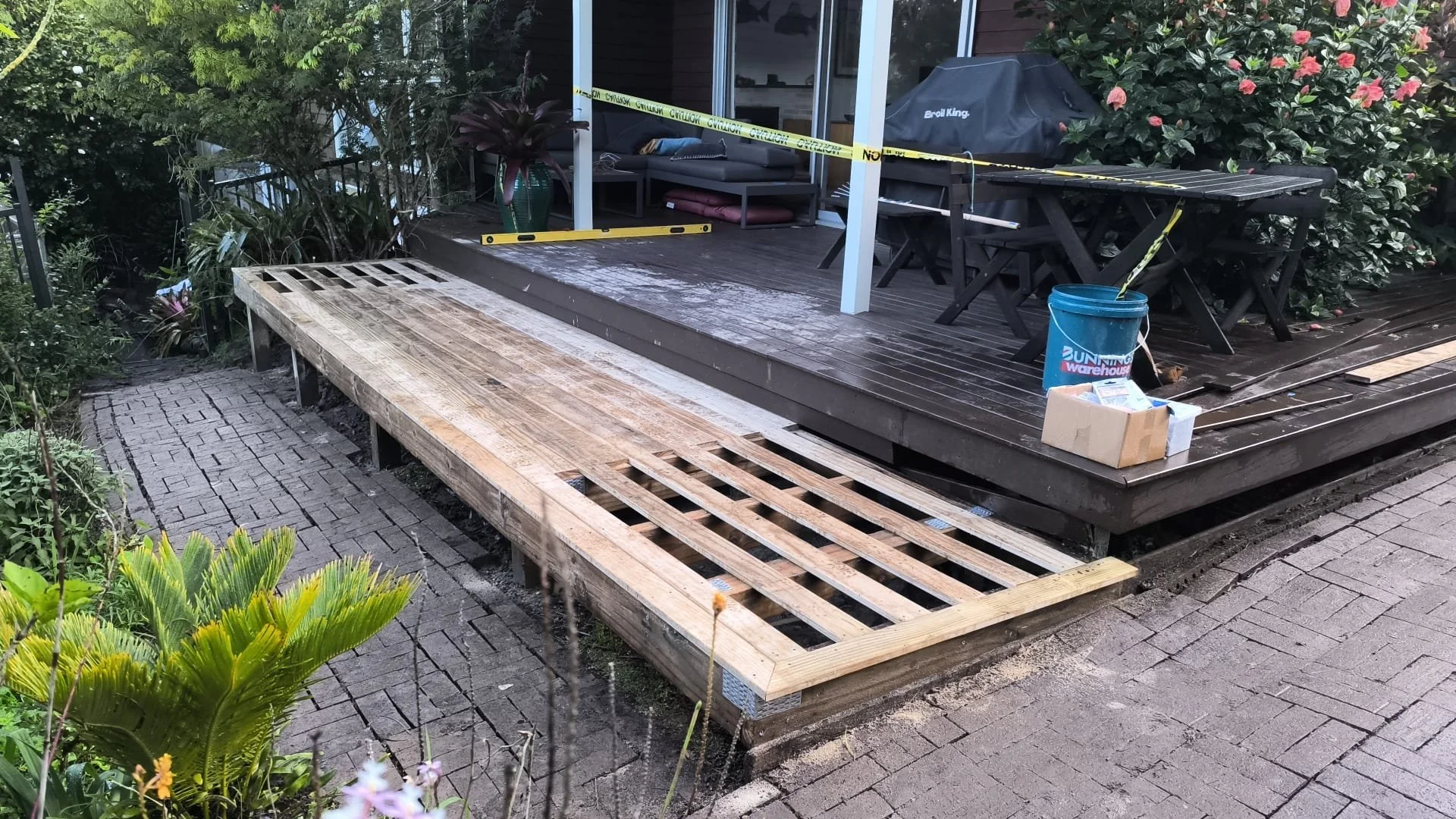
Unfortunately, the existing decking timber was suffering from extensive rot, and was not safe to reuse.
We discussed with the home owners and agreed on the supply of new decking timber also. The old timber was kwila, but give the owner’s intention to paint the deck once finished, we recommended a premium grade treated pine decking timber (cheaper than kwila, but of appropriate quality to last in the damp conditions).
Before:
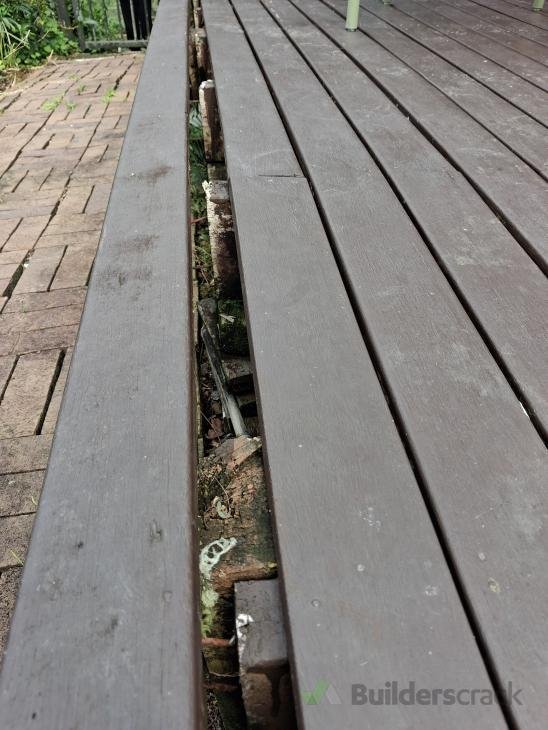
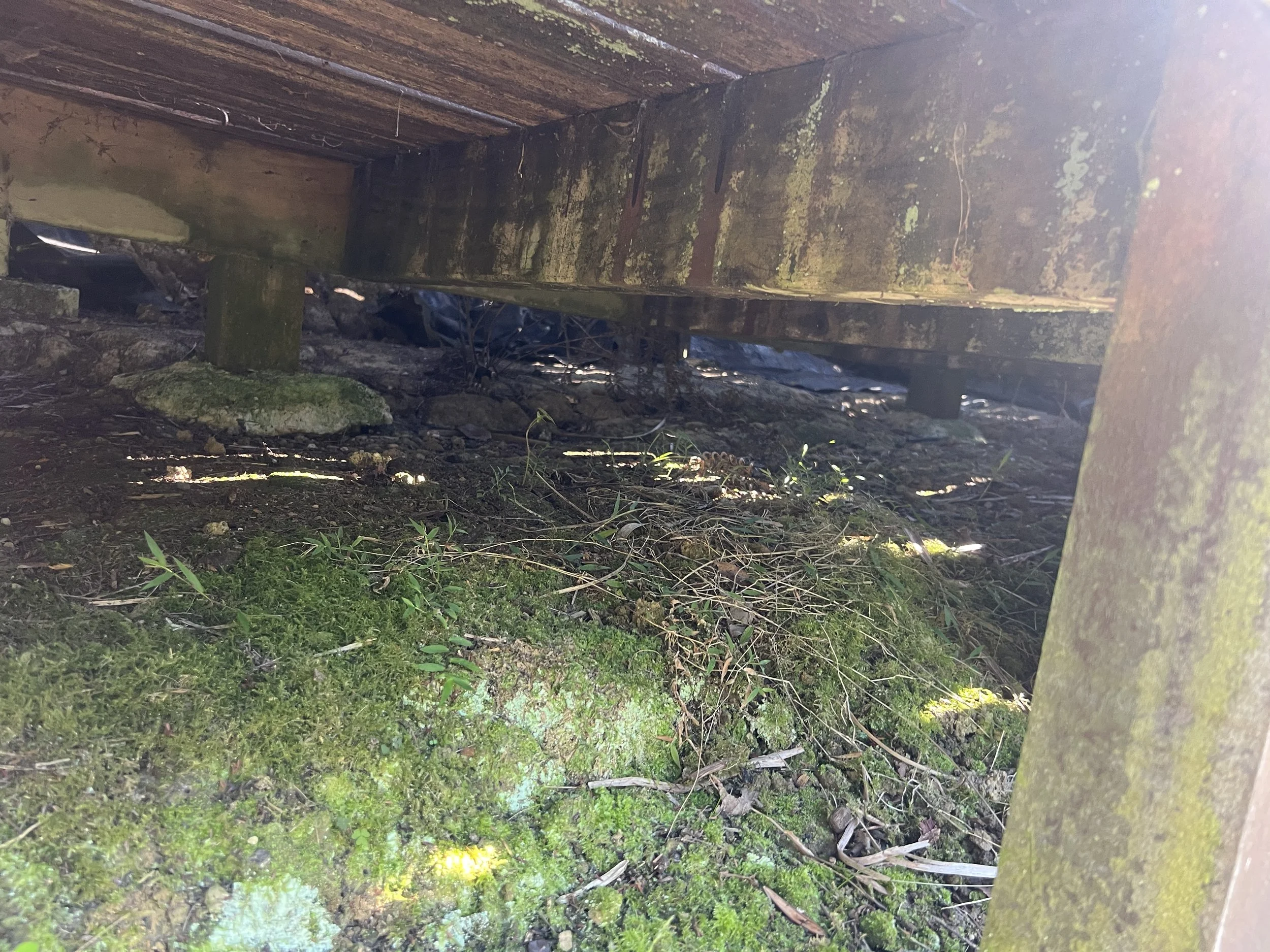
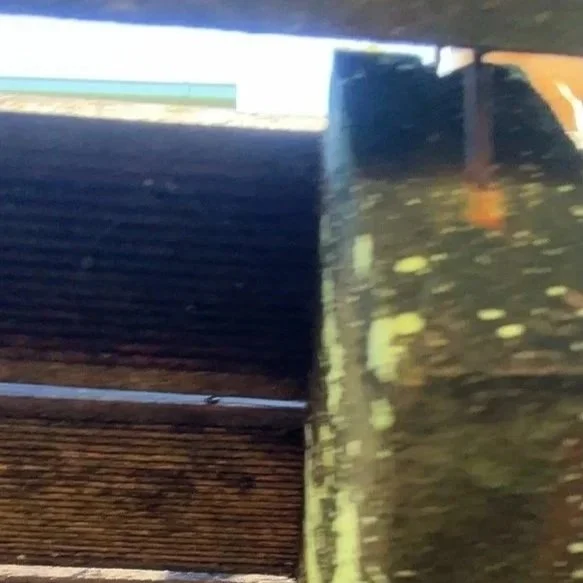
On the old deck, the posts had pulled away from the deck framing, and the deck area had become uneven, unsightly, and dangerous to walk on.
The joists had deteriorated to the point where nails were no-longer able to grip into the timber – they were just slipping out.
Much of the timber was showing signs of advanced rot, likely because the original framing timber was not of an adequate grade (not appropriately treated) to suit the damp environment.